


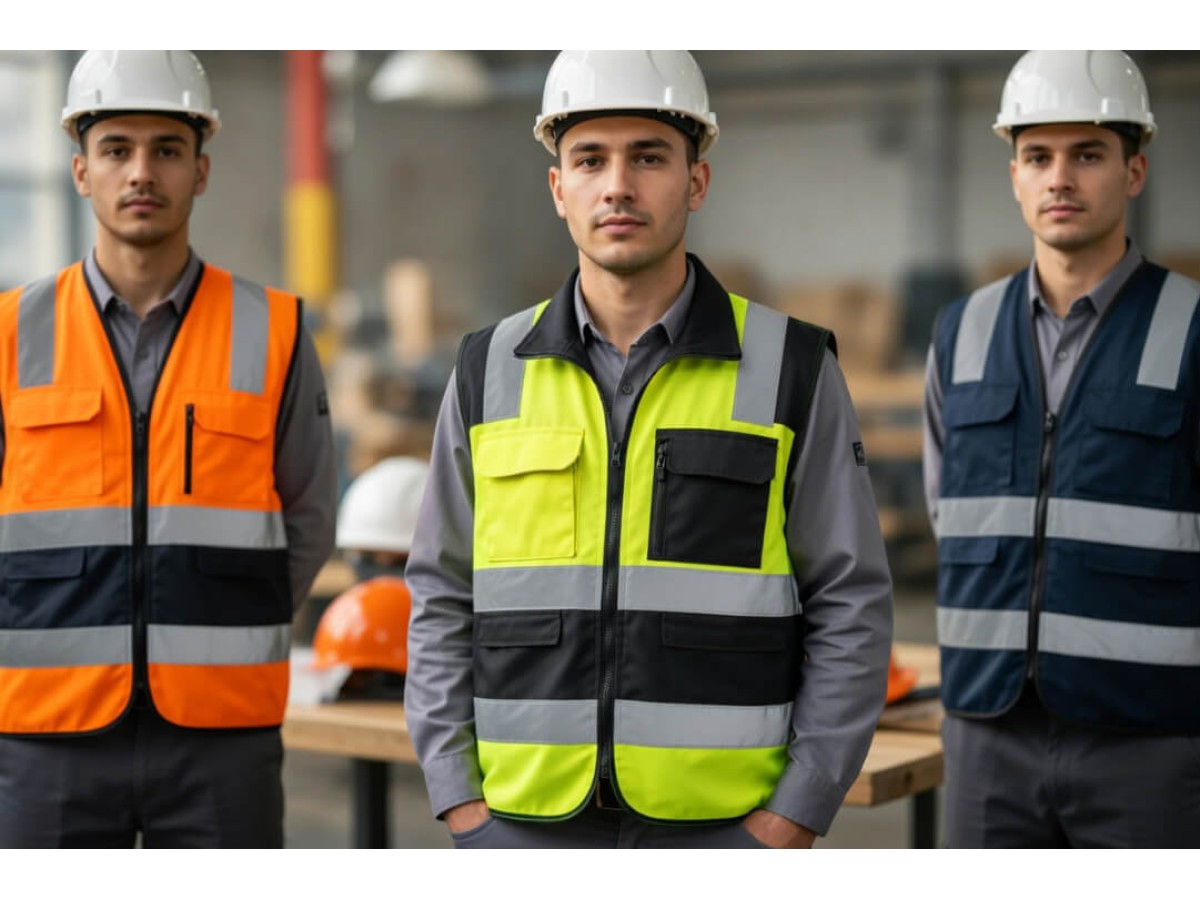
A work vest is rarely appreciated until it starts getting in the way. Too tight, and it restricts movement. Too thin, and it fails to protect against the cold. Lacking the right pockets, and even simple tasks take longer. That’s why choosing a work vest isn’t about appearance—it’s about safety, efficiency, and how well the garment holds up under daily use.
For procurement specialists and project managers, the vest is often seen as secondary to jackets or coveralls. In reality, it’s one of the most frequently used pieces of workwear—especially in construction, logistics, manufacturing, and warehousing. A well-chosen vest allows freedom of movement, maintains comfort, and keeps tools within easy reach. A poor choice—often driven by price alone—becomes obvious within weeks.
Start with the working conditions, not the design
The selection process should begin with the environment where the vest will be used. For outdoor work in transitional seasons, insulated and wind-resistant options are the logical choice. Indoors, where workers are constantly moving, lightweight and breathable vests perform better, preventing overheating and restriction.
In construction and roadwork, visibility is critical. A dark vest is not enough—high-visibility models with fluorescent colors and reflective elements are essential. In low-light conditions or around machinery, this is not a feature—it’s a requirement.
In production and warehouse settings, the priority is balance. The vest must be durable enough to withstand friction, frequent use, and the weight of carried items, while still remaining comfortable. In industries such as food production or healthcare, the focus shifts toward hygiene, ease of maintenance, and compliance with operational standards.
Where there are higher risks—such as welding, high temperatures, or static electricity—standard vests are not suitable. These environments require specialized protective clothing selected according to safety regulations and risk assessments.
Material determines durability
Fabric quality plays a key role in how long a vest will last. Heavier materials tend to be more resistant to wear but can feel stiff. Lighter fabrics offer better mobility but may not withstand intensive use.
Blended fabrics, such as cotton and polyester, often provide the best balance. Cotton improves comfort and breathability, while polyester enhances durability, shape retention, and resistance to frequent washing. This is especially important for garments used daily.
Insulated vests require careful consideration. Not only the outer fabric matters, but also the filling. Thick insulation works well for static tasks in cold environments but becomes impractical for active work. Thin insulation, on the other hand, may not provide sufficient protection. The right choice depends on activity level and working conditions.
Fit directly affects performance
A vest should support the work—not force the worker to adapt to it. Tight fits restrict movement and create tension, particularly in the shoulders. Loose fits can snag on equipment and wear out faster.
A common mistake is choosing sizes based on everyday clothing without considering layering. Work vests are worn over other garments, so extra room is necessary—especially in colder seasons—but without excessive bulk.
For companies, it’s important to standardize not only the model but also the sizing approach. This reduces errors, returns, and unnecessary inventory costs.
Details make the difference
Functionality is defined by small details. Pockets should be practical: too few create inconvenience, too many add weight and complexity. The best solution is a balanced layout with easy access and secure closures.
Zippers are generally more practical than buttons, especially when the vest is frequently put on and taken off. In colder conditions, features like a high collar, extended back, and durable fasteners improve comfort and longevity.
Reflective elements are useful not only on roads but also in warehouses and production environments. Reinforced seams and wear-resistant inserts further extend the lifespan of the vest.
When specialized protection is required
There is no universal vest for every situation. High-visibility models are essential in areas with traffic or low lighting. Fire-resistant or anti-static vests are necessary in environments with ignition risks or electrical hazards.
Trying to use one solution for all roles rarely works. Different jobs require different protective properties, even if the garments look similar.
In hygiene-sensitive industries, simplicity is key. Fewer design elements make cleaning easier and help maintain required standards.
Price should be measured over time
Evaluating a vest based only on its purchase price is short-sighted. What matters more is its lifespan. If a vest quickly loses shape, wears out, or is avoided by workers due to discomfort, any initial savings disappear.
Consider how often the vest will be worn, washed, and exposed to stress. Daily use, outdoor work, and physical labor significantly increase wear. In such cases, higher-quality options are often more cost-effective.
For companies using uniforms, long-term availability is also crucial. If a model is discontinued, replacing or expanding stock becomes difficult. Reliable suppliers who ensure consistency over time provide a clear advantage.
Choosing for a team: a systematic approach
Selecting a vest for personal use is straightforward. Equipping a team requires a broader perspective: different roles, seasonal needs, logistics, and brand image all come into play.
In practice, using several coordinated vest types is more effective than relying on one universal option. Lightweight models for indoor staff, insulated versions for outdoor work, and high-visibility vests for high-risk areas help avoid compromises and improve usability.
Appearance also matters. Consistent design and branding contribute to a professional image. However, visual aspects should never outweigh functionality—the vest is, first and foremost, a working tool.
Before making a purchase, it’s worth asking a few practical questions: where and how long will the vest be used, what needs to be carried in it, is high visibility required, how will it perform after washing, and will it be available again in the future?
A well-chosen work vest requires no adjustment. It doesn’t interfere or distract—it becomes a natural part of the workflow, improving comfort, safety, and overall efficiency.
Write a comment