

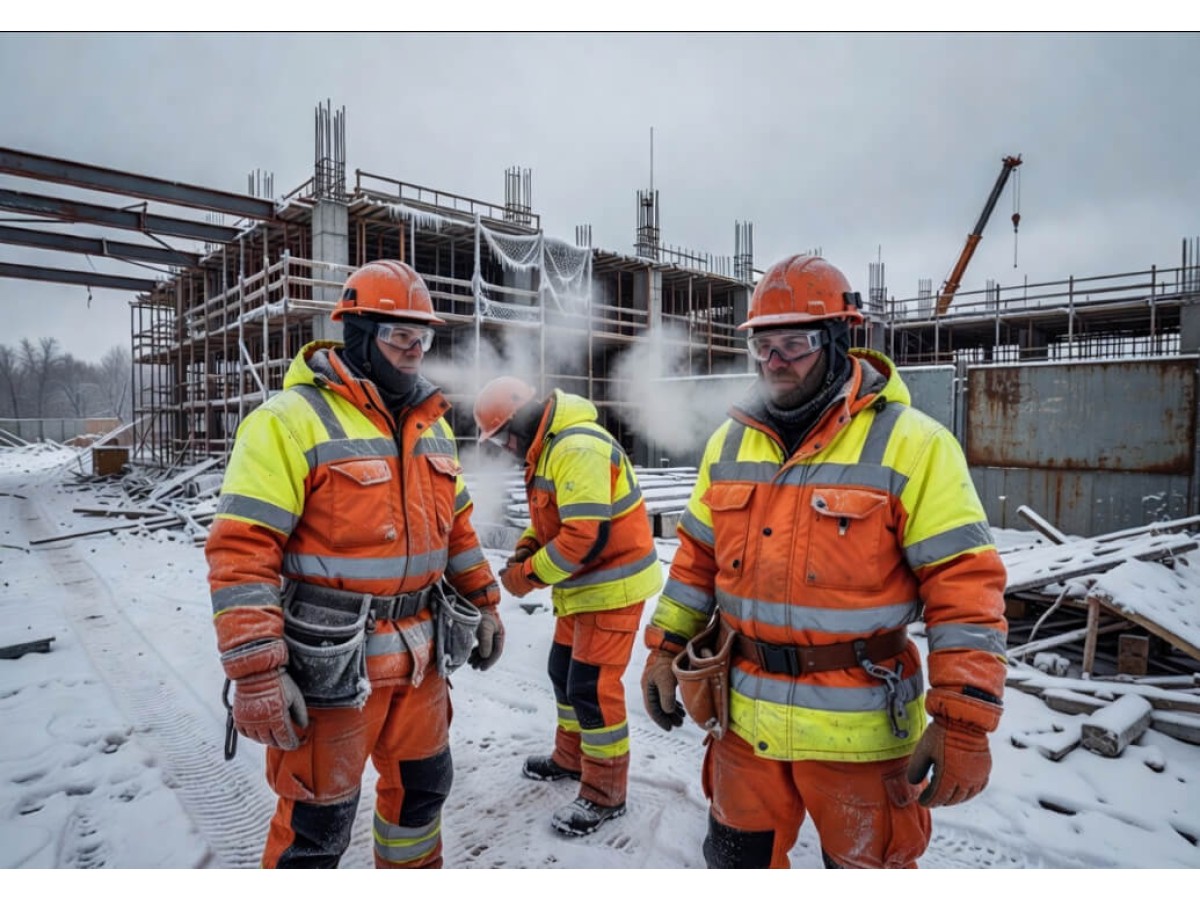
Already in the first hours of a cold morning shift, it becomes clear whether a jacket is actually doing its job or is just an extra layer of clothing. When your shoulders cool down quickly, your back becomes damp with sweat, and the contents of your pockets constantly get in the way, work inevitably slows down, becomes less comfortable, and even less safe. That’s why high-quality cold-weather work jackets are not a matter of appearance. They directly affect efficiency, focus, and a worker’s ability to complete a shift without unnecessary strain.
This issue is especially relevant for companies providing clothing for employees in construction, logistics, manufacturing, warehousing, and outdoor operations. A poor choice leads not only to employee dissatisfaction but also to faster wear and tear, additional costs, and frequent replacements. A properly selected jacket, on the other hand, lasts longer, matches working conditions, and supports a consistent professional team appearance.
How to understand which jacket is truly suitable
There is no universal solution that works equally well for everyone. The working conditions of a warehouse employee constantly moving between indoors and outdoors differ significantly from those of road workers or welders on open sites. Therefore, it’s important to consider not only insulation thickness but also the overall work environment.
A key factor is the combination of temperature and wind. Dry frost requires one approach, while damp cold with gusts of wind requires a completely different one. A jacket that feels comfortable at −5 °C in calm weather may be insufficient at around 0 °C on a windy site.
Physical activity is just as important. During intense movement—lifting loads, walking, changing positions—an overly warm jacket can cause overheating. This leads to sweating and then increased cold sensation. At the same time, low-activity work requires more substantial insulation.
Professional risks should also be taken into account. In some environments, high visibility is crucial; in others, protection from sparks, fire, or static electricity is needed. Cold is only one of many factors—and not always the most important.
Materials and insulation: where the real difference lies
A common mistake is judging a jacket solely by the thickness of its lining. In practice, the outer material and overall construction matter much more. If the outer layer allows wind or moisture through, heat won’t be retained—even if the insulation seems thick.
In industries where clothing is exposed to constant mechanical stress—construction, manufacturing, service—fabric durability is essential. A jacket must withstand regular use, washing, and contact with tools without losing its properties after just one season.
Optimal insulation is about balance. Insufficient protection leads to hypothermia, while excessive bulk restricts movement. The best models combine thermal insulation with a well-designed cut, allowing freedom of movement and comfort in different working positions.
Breathability should not be overlooked. If moisture isn’t released outward, comfort quickly disappears—even at moderate temperatures. That’s why a jacket should always be evaluated in the context of actual working conditions.
Details that make all the difference
The true quality of a work jacket becomes evident in the details within the first days of use. A high collar that protects the neck, a hood compatible with a helmet, and cuffs that block wind are not extras—they are essential features.
Pocket functionality is also important. They should be secure and easy to use so workers can quickly access items even while wearing gloves. Poorly designed pocket placement reduces efficiency and creates constant inconvenience.
Features like a two-way zipper, reinforced seams, an extended back, and an adjustable hem directly affect durability and comfort—especially for those who operate machinery, bend frequently, or move a lot.
When specialized solutions are needed
Not all winter work jackets are limited to insulation. Many industries require additional features. For example, in construction or logistics, high visibility provided by reflective elements is essential.
In metallurgy and welding, standard materials may be unsafe—flame-resistant or anti-static solutions are required. In the food industry, hygiene, ease of care, and compliance with sanitary standards become the priority.
This reinforces a simple idea: choosing based on price alone is a mistake. If a jacket doesn’t match the conditions, any savings quickly turn into extra costs.
Standardization or individual approach
A single model for the entire team simplifies procurement and supports a corporate look. However, in practice, different roles require different solutions.
Often, the optimal approach is a combination of a unified visual style with varied functionality. This allows companies to meet specific job requirements without compromising their overall image.
It’s also important to consider size consistency and product availability. The ability to reorder the same models without quality loss plays a key role in the long term.
Common mistakes in selection
Companies often choose overly warm models for active work. As a result, employees overheat, feel uncomfortable, and use the jacket incorrectly.
Another common mistake is underestimating wind and moisture. A jacket suitable for mild winter conditions may be useless on an exposed site.
Ignoring the layering principle is also an issue. Comfort depends not only on the jacket but also on the base layers.
Finally, it’s unrealistic to assume all employees will use equipment in the same way. A good jacket should be adaptable and versatile in use.
What to уточнить before purchasing
Before buying, it’s important to obtain full information: material composition, insulation level, operating and care conditions. Size availability and the possibility of repeat orders should also be clarified.
Personalization is another key aspect. Adding a logo strengthens corporate identity and makes the team more recognizable.
A supplier experienced in workwear can offer not just a product, but a comprehensive solution tailored to real working conditions.
A properly selected winter work jacket does not distract from the job or create unnecessary discomfort. Its main purpose is simple: to allow a person to focus on their duties rather than on the weather.
Write a comment