


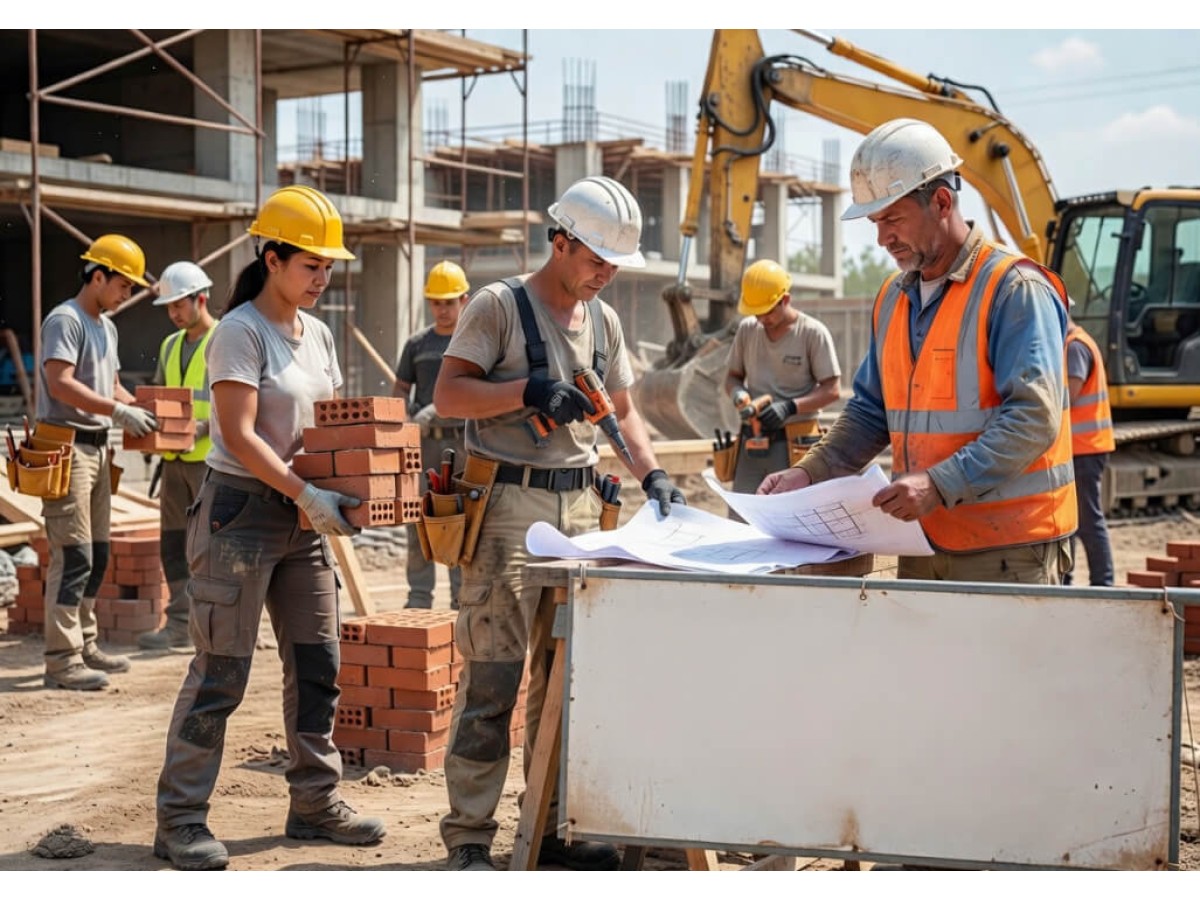
On a construction site, the cost of a mistake is measured not only in missed deadlines, but also in injuries, downtime, and additional expenses for replacing equipment. That’s why choosing workwear for builders is not about appearance. The focus is on safety, freedom of movement, durability, and the ability to work through a full shift without excessive fatigue.
In construction, clothing is just as much a tool as machinery. If trousers quickly wear out at the knees, a jacket restricts movement, or the fabric handles moisture poorly, work efficiency inevitably decreases. When working outdoors—in cold, damp, or dusty conditions—poorly chosen gear quickly turns into an ongoing expense. That’s why decisions should be based primarily on working conditions rather than the lowest price.
Basic set: what is actually needed
For most professionals, a standard set includes work trousers, a jacket or vest, and a functional base layer. In environments with high levels of wear and contamination, the key factors are fabric strength, stitching quality, and thoughtful design.
Construction work trousers must withstand constant friction, kneeling, and the load of carried tools. The best options include reinforced knee areas, functional pockets, and compatibility with knee pads. Knees are usually the first area to wear out, especially in concrete, installation, and finishing work, so saving on this element often leads to quick replacement.
A jacket should be selected according to season and work intensity. In cold weather, protection from wind and moisture is essential, but excessive insulation becomes a hindrance during active work. That’s why a layered approach is more effective: a base moisture-wicking layer, a durable outer layer, and additional insulation when needed.
Coveralls remain relevant in dirty and dusty environments, but they are not always the most convenient option. For many tasks—such as façade or roofing work—a two-piece set is more practical, as it is easier to adapt and replace individual parts as they wear out.
What determines service life
The durability of workwear depends not only on material but also on construction. Cotton is comfortable and breathable but handles moisture and wear less effectively. Blended fabrics (polyester + cotton) are often more practical: they dry faster, hold their shape, and withstand frequent washing better.
There is no universal solution. In summer, heavy fabrics can be uncomfortable; in winter, lightweight clothing provides insufficient protection. A practical approach is to maintain at least two seasonal sets: for warm and cold weather.
Details are equally important: reinforced areas, triple stitching, high-quality zippers, and reliable fasteners. These elements determine how often clothing needs to be replaced, especially when outfitting an entire team.
Visibility and safety
On construction sites, it is not enough to protect workers—they must also be visible. In areas with machinery, roadworks, or logistics operations, high-visibility clothing is an essential safety requirement.
Reflective elements and bright colors should not be limited to vests—they should also be integrated into jackets and trousers where needed. In low-visibility conditions, a vest alone is often insufficient. A modular approach works best: base clothing supplemented with certified high-visibility elements.
At the same time, balance is important. Paying extra for features that are not actually used is inefficient. Clothing requirements should match real on-site risks.
When additional protection is needed
Standard workwear is not always enough. For welders, metalworkers, and those working with high temperatures, flame-resistant and anti-static clothing is required. These items are usually purchased for specific tasks rather than for the entire team.
The same applies to weather protection. In cold and rainy conditions, waterproofing and thermal insulation are critical. A frozen worker becomes slower, less precise, and more prone to mistakes. Therefore, insulated jackets and waterproof trousers are an investment in stable productivity.
Comfort as a performance factor
Comfort is not an extra benefit—it is part of the work process. Clothing that pulls, pinches, or restricts movement directly affects work speed and quality. This is especially important for tasks involving frequent bending, lifting, and overhead work.
For companies, consistent sizing and repeatable models are crucial. Variations between batches lead to employee dissatisfaction and complicate procurement. A reliable supplier must ensure consistent quality and a clear sizing system.
Additional comfort comes from well-designed features: ventilation zones, elastic inserts, adjustable elements, and practical pockets. When functionality is well thought out, workers spend less time on unnecessary movements.
How to purchase without unnecessary costs
A common mistake is focusing only on the lowest price. Cheap workwear wears out faster, and overall costs increase due to frequent replacements.
It is more rational to evaluate equipment based on four factors:
- working conditions,
- required level of protection,
- intensity of use,
- service life.
Different types of work should use different sets rather than a single universal solution. It is also important to ensure quick restocking when teams grow or staff turnover occurs.
Image and practicality
Workwear shapes how a company is perceived. A unified style helps identify employees and creates a sense of order and discipline on site. Logos and corporate colors reinforce this effect.
However, appearance should not come at the expense of functionality. Clothing must first protect and withstand working conditions, and only then support corporate image.
Common mistakes
In practice, three main issues occur most often:
- trying to find one universal outfit for all situations,
- ignoring feedback from workers,
- choosing based solely on unit price.
It is far more effective to calculate total cost over the full service life and consider real working conditions.
In construction, workwear is not a random purchase but part of the production process. The more accurately it matches tasks and working conditions, the fewer risks, delays, and unnecessary expenses occur. Properly chosen equipment does not get in the way—it helps work faster, safer, and more consistently every day.
Write a comment